By Nathan Alderman – November 14, 2008, 4:10 PM
The facts are these: TV networks are strange and illogical beasts.
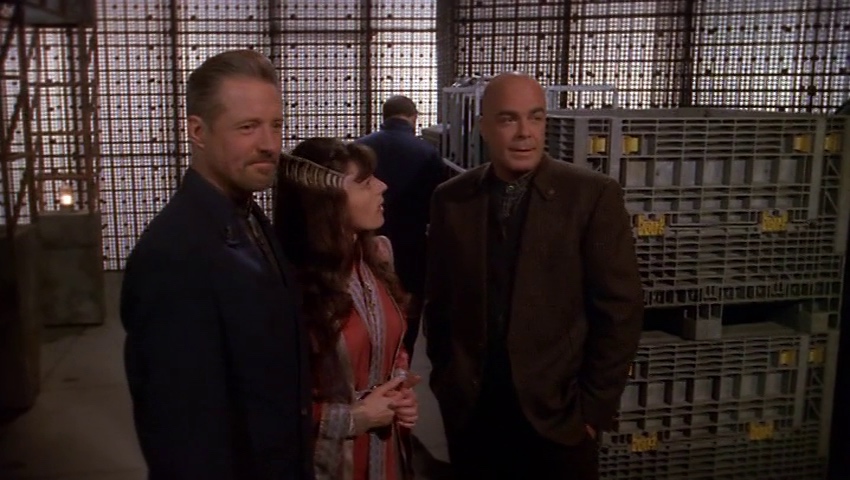
With a heaping helping of network promotion, ABC’s Pushing Daisies became a modest but surprising hit last season. Creator Bryan Fuller — remember him? The guy who almost singlehandedly made Heroes not suck? — gave the tale of a lonely piemaker with a resurrecting touch, and the girl of his dreams he brought back from the grave, a bizarre blend of heart-tugging romance, screwball comedy, and twisted, pitch-black humor.
Then the writer’s strike, uh, struck, after just nine (mostly very good) episodes of Daisies had been produced. When the strike finally ended, most shows hustled back into production to crank out a few more episodes before the end of the season, just to remind viewers what they’d been missing. But ABC looked at Daisies’ nine episodes and said, “Nah, we’re good. Come back next fall.”
And when it did, after ten months of zero on-air reruns and little to no promotion, half of its viewership failed to return with it. ABC presumably thought very hard, and then devised a solution: Run even less advertising. Surely, that would bring the numbers up!
It did not.
The ratings remained stubbornly stuck, wavering between “low” and “even lower,” and occasionally dipping toward “Veronica Mars, and you know how that turned out.” And yet, when all seemed darkest, an unlikely savior appeared: Barack Obama. The Wednesday before the election, our intrepid President-elect managed to secure infomercial time on every network besides ABC. Thus, 1 million viewers who were either presumably full up on Hope and Change, or hellbent on voting for Sen. Sad Old Man and Gov. Seriously, Have You Listened to Her Speak?, gave Daisies a shot.
ABC’s brilliant response to this upsurge in the ratings? Pre-empt the show for two weeks running, first for a Dancing With the Stars results show cruelly displaced by a certain inconveniently scheduled Presidential election, and then for the CMA Awards. Surely, the best way to build momentum for a show gaining in the ratings is to keep it off the air for as long as possible.
So here we are. The thirteenth and final episode (to date) of Daisies’ second season is in the can. In an entirely different sense, so are the show’s chances for survival. But there’s one last glimmer of hope — the easiest save-this-show campaign ever. No letter-writing, e-mailing, petition-signing, phone-calling, or ridiculous item-vaguely-associated-with-the-show-sending-in-ing required.
You just have to watch Pushing Daisies when it returns next week.
If you’ve given the show a chance and drifted away, why not come back and give it a fresh shot? This season features fewer vaguely uncomfortable musical interludes, a vastly improved actually-funny-to-just-annoyingly-clever ratio for the dialogue, and a subtly creepy, propulsive energy to the storytelling that the feather-light first season hadn’t quite reached.
If you’ve never seen the show, set your TiVo. It’s still unequaled by anything else on television, with its beautifully stylized world, its off-kilter sense of humor, and a great big swooning sense of romance that has absolutely nothing to do with which preternaturally attractive doctor is sleeping with which other preternaturally attractive doctor this week.
I love Pushing Daisies unreservedly. There’s nothing calculated about it, nothing focus-grouped. No cunningly placed sops to ensnare a particular demographic. No cheap storytelling stunts to pull in sweeps-week ratings. It’s big, bold, and daring, and it proudly wears its heart on its sleeve. We need more TV shows that take chances like this one, that give us something besides the same set of cops or lawyers or doctors week in and week out.
Wednesday, Nov. 19, is my birthday. If you’ve ever enjoyed anything I’ve written for the site, you can give me the gift of more Pushing Daisies. Tune in that night at 8 p.m. ET on ABC. Tell your friends. At best, you might discover your new favorite TV series. At worst, you’ll only have surrendered another hour of your life. There are worse fates than that.
Like, say, watching Knight Rider.
By Nathan Alderman – September 26, 2008, 3:00 PM
Seriously, did no one tell poor Bruno Heller that he was creating a police procedural for CBS? The Crimes Being Solved network has like nine of them already — CSI, CSI:Miami, CSI: New York, Numb3rs, Cold Case, NCIS, Criminal Minds, Without a Trace, and the upcoming Eleventh Hour — and except for various small differences in setting, premise, and amount of flashy computer graphics, they’re all pretty much the same. Find a bunch of moderately familiar actors who don’t mind coasting through a good chunk of their career in exchange for a steady paycheck; crank through the same five basic plots Law & Order has been using since, oh, the dawn of recorded history; and make sure to have plenty of sexy, blood-covered dead women in their underwear, just to keep things unsettlingly lively. Voila! You’ve got a critic-proof entertainment product guaranteed to run until the entire cast gets changed out three times over or the sun goes cold — whichever comes first.
So why did Heller — co-creator of the totally-not-a-CBS-police-procedural series Rome — waste his time and effort by writing a pilot that was actually sort of intelligent?
In its basic construction, The Mentalist is no different from any of its mediocre-to-lousy brethren. You’ve got Simon Baker as the Troubled Hero With a Tragic Past, who is Brilliant in a Distinctive and Unusual Way. He has a flirty, clashing rapport with Robin Tunney, the No-Nonsense Law Enforcement Gal Who Secretly Wants to Bone Him Senseless, You Can Totally Tell. She works with her Team of Mismatched Subordinates, including the Big Lug (Owain Yeoman), the Unexpectedly Funny Guy (Tim Kang), and the Hot, Wide-Eyed Rookie Girl (Amanda Righetti). A baffling crime is committed, to and by rich people living someplace sunny and appealingly photographed, and involving a beautiful-yet-mutilated lady-corpse and a Taunting Serial Killer Archenemy. One hour later, after the hero has a few opportunities to Do Quirky Things, Brood About His Secret Pain, and Demonstrate His Unique Gifts, guns are drawn, people are shouting authoritatively, the hero is smiling, and the case is neatly wrapped up.
But within these considerable constraints, Heller writes a distressingly good pilot script. There’s not a scrap of Stupid Premise Exposition here; everything we need to know about Baker’s (unfortunately named) former phony psychic Patrick Jane is elegantly shown or implied, not crammed into some lame monologue. The structure of the episode is boldly unafraid to jump back and forth in time, keeping viewers in mild suspense and uncertainty about Jane and his motivations. And the scene in which we discover his Tragic Past leaves a surprising amount up to the viewer’s imagination. We also get a damn fine opening act, in which Jane wanders into the house of a rich couple with a murdered daughter, raids their fridge to make himself a sandwich, chats with the distraught mother, and neatly engineers a startling comeuppance for the girl’s killer. It’s a memorable, efficient introduction both to Jane and his perceptive powers of observation.
I had so much respect for how well Heller pulled off these elements that I completely forgave him for flubbing the pilot’s central mystery. The clues our hero cites when nabbing the killer are laughably flimsy, and the murderer, though fairly interesting as an overall character, has to stand there explaining a motive that was barely even hinted at in the entire preceeding hour. So much for showing, not telling. Still, I kinda have a perverse respect for anyone who can write a CBS procedural and make everything about it pretty good except the procedural aspects.
I can see why Baker’s gotten a lot of good press; he’s a charismatic guy, very early Michael Caine. Even when he has to say silly, sub-Whedon things like, “He irks me. He’s irksome,” Baker carries Jane’s inner sadness well. Tunney is no less wooden and inert here than she’s been in anything else I’ve ever seen her in, but somehow she’s like five times hotter — especially in the rare moments when she’s not glowering — so I feel shamefully compelled to give her a pass.
As for the Mismatched Subordinates, I’ve liked Yeoman since his funny turn on Kitchen Confidential, and he does well with the few scraps he gets here. Kang’s Agent Cho, who plows through his hilariously tactless lines with the deadpan intensity of Dragnet’s Joe Friday, is pretty amusing. As for Righetti, I like that her character’s devoutly religious without being a total nincompoop, and, well, she’s certainly nice to look at.
As much as I admire Heller’s skill at story structure, I only wish it were in service of something better than yet another cookie-cutter detective show. I’d much rather watch a series about Baker’s shrewd, observant, guilt-ridden protagonist if he weren’t forced to go through the mystery-solving motions every week. But hey, if you like your TV crimes sensational, your plots predictable, and your advertising suspiciously tailored to the Metamucil demographic, at least now you’ve got a series to watch that’s trying to be more than just adequate.
Watch a handsome man peer intently at things Wednesdays at 9 p.m. on CBS.
By Nathan Alderman – September 12, 2008, 8:40 PM
Now that the movies and their tall, tall dollars have come a-calling, J.J. Abrams apparently can’t really be bothered to work on TV shows anymore. Unfortunately for viewers, that hasn’t stopped him from creating more of them.
His neglect killed the first-rate Alias stone dead, and nearly did in Lost until co-honchos Damon Lindelof and Carlton Cuse regained their bearings and yanked the show back on course. None of which bodes well for Fringe, Abrams’ admittedly enjoyable new series for Fox, with which he has once again promised to be totally involved. He swears. This time. Really.
It doesn’t help that his partners on Fringe, who are also too busy cashing fat movie checks to do anything more than casually supervise the series with their names all over it, are arguably among the least talented members of his usual stable of writers. I honestly don’t know how Alex Kurtzman and Roberto Orci went from jobbing for Hercules: The Legendary Journeys to writing securely mediocre big-budget spectacles for the likes of Michael Bay. The best thing I can say about their work on movies like Transformers and The Legend of Zorro is that it mostly isn’t painful to sit through, and occasionally entertaining, provided things are blowing up or people are fighting or there’s maybe an attractive woman on the screen now and then.
The result, in Fringe’s case, is well below Abrams’ previous high water marks for entertainment, though it’d be a fine effort for nearly any other producer. Fringe is slick, spooky, fun, and watchable, but it also feels like the halfhearted work of an understandably distracted guy. (I have a very strong suspicion that Abrams’ new Star Trek movie will set phasers to awesome.) Where the pilots for Alias and Lost grabbed you by the throat and refused to let go, Fringe’s 90-minute opener feels like it’s coasting on Abrams’ entirely deserved reputation, and the lingering goodwill for that other well-known Fox series about FBI agents investigating the paranormal.
Sure, you could boil Alias down to Felicity in the CIA, and reduce Lost to Survivor (With Polar Bears). But both had a spine-tingly charge of the otherworldly about them, whether through Alias’s Renaissance techno-prophet Milo Rambaldi or Lost’s eerie Dharma Initiative, that made them feel fresh and new. Fringe, in contrast, is basically a remake of The X-Files. Government agents investigate a rash of bizarre incidents, some of which may be related to a ruthless, far-reaching conspiracy. There it was alien abductions and government spooks; here, things kick off with a face-melting synthetic virus unleashed on an airplane, and the creepy corporation that may or may not be behind it. The specifics and the character dynamics may be different, but the premise is exactly the same.
Those character dynamics, in all fairness, are pretty interesting. Abrams’ seemingly unerring knack for casting hugely charismatic female leads hasn’t deserted him here; as FBI agent Olivia Dunham, Anna Torv’s only weak spot is her on-again off-again American accent. The character seems pretty flat on the page — most of the characters do, honestly — but even when the script’s letting her down, you can see Torv digging deep to make Olivia a whole and believable person. She’s smart, dogged, open-minded, and not above the occasional sly bit of duplicity. There’s a part at the end where the script, for some reason, calls for Olivia to be all smiley and flirty immediately after what have got to be several of the very worst days of her life. But Torv pushes that happiness right to the ragged edge of hysteria; she finds the heartbreak and desperation just underneath Olivia’s smile. Whether or not Fringe goes anywhere, Torv’s definitely one to watch.
As good as she is, John Noble’s even better. The actor best known to geeky Americans as Denethor from The Lord of the Rings here plays Walter Bishop, a massively brainy and mentally unstable scientist whose decades-old research is linked to the in-flight horrorshow Olivia’s investigating. I’ll give the script credit where it’s due here; crazy is a hard thing to pull off in drama, and both the writing and Noble’s performance really nail it. Bishop seems not so much insane as just off on his own abstract plane of reality, by turns touching, mysterious, and slightly frightening. Walter’s left hand also has an eerie habit of trembling involuntarily, which left me wondering whether that’s a callback to Doctor Strangelove (his dark side approaching the surface) or Saving Private Ryan (the flutterings of his conscience). His character is the best, most distinctive, and most intriguing aspect of the pilot.
As the wobbly third corner of this triangle, we have Joshua Jackson as Walter’s son Matthew Peter, an unfortunate collision of just-OK acting and really bad, lazy writing. Pete’s role as a mediator and translator of sorts between off-on-Mars Walter and grounded Olivia is actually fairly compelling, which makes the two-dimensionality of his character all the more disappointing. Despite never graduating from college, Peter’s got an IQ of 190. How do we know this? Um… other characters tell us so, and occasionally he spouts polysyllabic technobabble. We also know he’s a total jerk because he repeatedly calls Torv’s character “sweetheart” — although apparently, all it takes is a smile from her and the realization that she totally hoodwinked him for Pete to quit sulking, fire up the ol’ Sexual Tension Engines to Maximum Smolder, and go running around punching people on her behalf. Seriously, there is zero other motive for his character’s change of heart beyond “I am having a change of heart,” and possibly, “Wow, blonde FBI gal pretty.” Jackson’s performance is perfectly serviceable in this hugely underwritten role; he seems to have two expressions, Smirk and Brood, and he gives both of them a workout. The poor guy’s probably just glad to be in something that isn’t a crappy horror movie or, you know, Dawson’s Creek.
The cast also includes the awesome Lance Reddick, doing the best he can with a far more thankless variant of his steely-eyed bossman from The Wire. (Like The X-Files’ Walter Skinner, his real allegiance in the murky goings-on is left deliberately uncertain.) And in the pilot’s one true moment of deliciously weird Abrams-ness, Blair Brown shows up as a functionary of the sinister Massive Dynamic corporation. She’s perhaps deceptively pleasant, entirely too reasonable, and her character has a really great, unnerving quirk to her that I hesitate to spoil here. She also gets the best and last line of the pilot, in a closing scene that again comes temptingly close to the spooktacular goodness of Abrams’ previous work.
Like I said, Fringe is slickly made, and every penny of the pilot’s big budget shows. Director Alex Graves is no Abrams when it comes to weaving together startling visuals and nail-biting action; I was hoping for something more like Abrams’ riveting pilots for Alias and Lost, and I didn’t get it. But the opening flesh-dissolving sequence on the plane is imaginatively staged (bonus points for having the unfortunate Patient Zero’s kindly, concerned seatmate be an Arab guy), and Graves makes the most of the pilot’s freedom to shoot in gorgeously gray and wintry Massachusetts surroundings.
The story? Eh, not bad. It kept me watching, and there was one big twist I could see coming in general — the series would have had no premise without a turnabout of some sort — but which pleasantly surprised me in its particulars.
On the minus side, the script dips into cliche too often. At one point, they ask the crazy guy, “What do we do now?” And instead of saying something great and weird, as he has in previous scenes, he just says, “… We wait.” Guys, Joss Whedon would have knocked a softball like that out of the park, and you know it. Also, for what feels like the umpteenth time in popular culture, we get a scene where Crazy Person Long Removed From the World finds profundity in an episode of Currently Popular Cartoon Show. (While eating takeout Chinese food! Someone in the writers’ room won Cliche Bingo that day.)
On the plus side, there’s a cow. Far too few science fiction dramas involve cows as regular cast members. I wholeheartedly approve of this bold leap forward for bovine representation on TV.
I also admired the series’ attention to detail. Stray cats prowl outside the windows of Walter Bishop’s basement lab, and after Torv’s character gets banged up in an explosion, her arms and legs show nasty bruises when she strips down to her skivvies for a stint in an isolation tank. (It’s a J.J. Abrams pilot. Of course the lead gal’s going to show off her undies, and of course she’s pretty damn spectacular. Although unlike Evangeline Lilly’s pause-the-TiVo moment in the Lost pilot, here Torv’s getting a metal probe shoved in her skull while tripping on ketamine and LSD, which tends to distract somewhat from her considerable Australian splendor.)
Apparently, Fringe’s premiere was a big disappointment ratingswise — surprising, given the heavy promotion it got, and Abrams’ strong pedigree among sci-fi fans. After watching the pilot, I’m not quite sure I’d mourn it if it went away, although it seems to promise a fun ride in future episodes. I’ll be interested to see whether Abrams keeps his promises to be more involved this time around. Perhaps it’s better that Fringe ultimately comes across as J.J. Abrams Lite. It’ll be that much less disappointing if Abrams ditches this latest effort to go off and do something involving, oh, even fatter stacks of hundred-dollar bills.
The truth is out there — except, you know, in a completely novel and different way — Tuesdays at 9 p.m. ET on Fox.
By Nathan Alderman – September 6, 2008, 8:39 PM
Dramatic series on FX have a clear mandate: Be slightly more intelligent, violent, and sexy than most of the stuff on network TV, but slightly less intelligent, violent, and sexy than most of the stuff on HBO. Some of FX’s series hit that mark with gusto (The Shield, Damages), some have sadly lost their way (Nip/Tuck), and some are just another opportunity for Denis Leary to play a blue-collar public servant who drinks too much and bangs a lot of hot chicks.
The new Hamlet-in-a-biker-gang series Sons of Anarchy’s first episode falls squarely in the middle of that pack: Not quite riveting, but entirely watchable, with a few welcome surprises.
Charlie Hunnam (the budget-priced Heath Ledger, and I mean that as a compliment) is Jackson “Jax” Teller, son of the dead founder of the gun-running Sons of Anarchy motorycycle club. The name “Jax” would be laughably preposterous if Jax were not also a badass dude who rides motorcycles, sports tattoos, and performs impromptu and unwanted surgery with a broken pool cue.
Since this is FX, not Fox News, Jax is also more or less a stand-up guy, looking forward to the birth of his first child (by his meth-addicted crazy ex-wife — you just know that’s gonna go well) and looking out for a fellow gang member struggling to support his family with honest, non-gun-running-or-beating-people-up work.
In the pilot, Jax must contend with his son’s premature birth and post-natal complications, all thanks to Meth Mommy’s poor sense of priorities; the theft of a crucial shipment of badass-looking guns by a rival gang that might as well be called The Stereotypical Mexicans; and his discovery of his late father’s wistful, idealistic manifesto, which apparently outlines a vision for the Sons of Anarchy that involves less gun-running and more, I dunno, hugging and talking about their feelings and stuff.
Because he’s handsome and muscular and rides a motorcycle, Jax also encounters an improbably foxy convenience-store clerk who signals her crush on him via strategic, surreptitious cleavage adjustment, and the clandestinely tattooed ex-biker chick turned doctor (the dour-yet-hot Maggie Siff) who’s helping treat his son. At one point, Doctor Trampstamp’s near-overwhelming desire to make out with Jax is doused by her realization that he’s currently covered in Mexican stereotype blood. Awkward!
For comic relief, we’ve got the club’s newest member, named “Halfsack” for his cringe-inducing Iraq War injury, chainsawing a dead deer out of a car’s windshield, and another gang member (Mark Boone Junior, the corrupt cop from Batman Begins) moonlighting as an Elvis impersonator. The latter element has the benefit of actually being funny, in no small part because that storyline involves a rival Asian Elvis impersonator who stays entirely in Southern-fried character even as he’s receiving a biker-style beatdown.
Yes, in case you mistakenly thought that a show about a gun-running motorcycle gang would be delicate and sensitive, this is a manly show about manly men. How manly? In their off hours, they get drunk, barbecue, and beat on each other bare-chested and bare-fisted until they start spontaneously hugging. Seriously, you could prescribe this show as a testosterone supplement. I think I grew a beard just watching it.
For all my mockery, the show’s really not too bad. For one thing, the casting’s pretty fantastic. Hunnam’s a solid lead, and he’s surrounded by fairly awesome folks like Boone, Ron “Hellboy” Perlman as the resoundingly criminal current leader of the gang, and Mitch Pileggi from The X-Files as the leader of the Neo-Nazi skinheads. Perlman’s always fun to watch, and his character here is not the clear-cut villain he could be; he’s secretly afraid of getting too old to ride, he fiercely protects his home town from the incursions of drug dealers, and he genuinely seems to care about Jax.
Katey Segal is particularly excellent as Jax’s mom; she’s warm and loving with him, but when she slinks off to Perlman’s bed, she suddenly becomes less Queen Gertrude and more Lady MacBeth. The striking viciousness in Segal’s character — the way the most cunning, calculated, and ruthless character in this series of macho men is a woman — is a truly excellent twist.
Weirdly enough, for a series from former Shield writer Kurt Sutter, the show takes too many easy outs to keep Jax likeable to the viewer. All the people Jax hurts, including the meth-dealing skinhead whose testicle he skewers with a pool cue, are clearly Very Bad People who Deserved What They Got. And every time Jax looks like he’ll be forced to do something genuinely horrible, a convenient coincidence keeps him just barely on the side of the angels. It’s not that the series has had its balls cut off entirely — but appropriately enough, at least one of them seems to be missing. (Seriously, what the hell kind of motif is that? Ouch.)
Still, I like the central dilemma the show’s set up for Jax: Following the lead of Perlman’s character into hardcore criminality, or drifting back toward his dad’s more peaceable but perhaps less practical vision. Between this intriguing dynamic, the uniformly fine acting, and the possibility of hot biker chicks in their underthings, I’m willing to overlook the spotty writing and give this show a shot. Just like the show’s bikers, who balance their adeptness at punching things by hacking computer databases and investigating financial records, Sons of Anarchy’s surplus of testosterone doesn’t mean it also lacks a brain.
Get your motor running and head out on the highway Wednesdays at 10 p.m. on FX. Broken pool cues strictly optional.
By Jason Snell – August 7, 2008, 5:30 PM
Courtesy of our very own Lisa Schmeiser, here’s a spreadsheet/grid of the 2008 Olympic TV coverage in convenient Excel and HTML formats. Lisa writes:
It’s not the prettiest spreadsheet because I am no Edward Tufte, but I figure we at TeeVee can offer this grid/spreadsheet for download for our readers. It’s a hell of a lot more convenient than having to keep going to NBC.
Pick your format, folks:
And thanks to Lisa for making this Olympian effort.
By Nathan Alderman – July 1, 2008, 6:51 PM
The Avengers, that swinging ’60s pinnacle of superspy cool, proved that a TV series could overcome budgetary restrictions with a winning cast, witty writing, and thriftily stylish production design. As for The Middleman, ABC Family’s cheerily Avengers-inspired summer series … well, two outta three ain’t bad.
Apparently, writing about a secret island full of polar bears and smoke monsters on Lost wasn’t nearly weird enough for Javier Grillo-Marxuach. No, he had to go and create this TV pilot-turned-comic-book-turned-TV-series-again about a square-jawed secret agent and his comely slacker sidekick, who battle all manner of brightly colored evildoers. It’s about as frothy as entertainment gets without veering into complete inanity, but the snappy dialogue’s nearly Pushing Daisies-grade at times — including occasional, surprising swerves into gleefully racy innuendo — and the casting’s darn near perfect.
Ever since I got hooked on Due South back in high school, I’ve had a soft spot for impossibly wholesome heroes, and Matt Keeslar’s Middleman more than fits the bill. Reciting his every cornball aphorism (“Sweet ghost of Preston Tucker!”) with a straight face and the sort of mellifluous voice one associates with the narrators of ’50s hygiene films, Keeslar’s never less than a hoot to watch.
As his reluctant sidekick, painter/temp/part-time crimefighter Wendy Watson, the lovely and charismatic Natalie Morales is a bit more hit-or-miss. Sometimes she seems to be playing so far to the opposite of Keeslar’s clean-cut earnestness that she comes off a bit flat — even whiny. But for the most part, she’s more than game for the weirdness each episode throws her way, and her snarky deadpan delivery plays well against Keeslar’s unwavering sincerity.
The rest of the cast is great, too. Mary Pat Gleason could have walked straight out of the comic book as Ida, the Middleman’s frumpy, foul-tempered android secretary. Jake Smollett brings unexpected soul and charm to Noser, the burnout philosopher who always seems to be hanging around outside Wendy’s illegal sublet. And the ridiculously cute Brit Morgan, as Wendy’s performance-artist roommate Lacey, may well be the series’ secret weapon. (Imagine Arrested Development’s Lindsay Bluth-Funke with a heart and a semi-functioning brain, and you’re nearly there.)
You’ll need a high tolerance for quirkiness to make it through this one, I’ll admit. At times, you can all but hear the writing staff laboring too hard to hit a certain snide screwball-comedy tone (and failing). In addition, one often gets the sense that the show’s narrative ambitions are slamming into the wall of financial reality, often and with great force.
Each episode looks like it was made for five bucks, maybe six on a good week, with Power Rangers-grade special effects and (aside from Wendy and Lacey’s well-decorated apartment, and Middleman HQ) sets that seem threadbare even by cable-drama standards. I could forgive the series for not quite living up to the lush, energetic artwork of Les McClaine, co-creator of the series’ comic book incarnation, but man, it doesn’t even come close. Grillo-Marxuach and his production team are clearly Avengers fans — heck, Jeremiah Chechick, director of the infamous 1999 Avengers movie, directed the pilot and helps produce the show — so hopefully they can take some cues from that show’s artful camera angles and industrious raiding of the studio prop department.
But for all its budgetary failings, this is still a series in which tracksuited mobster gorillas wield machine guns in the service of a mad scientist; reformed succubi staff a high-fashion design agency; and a huffy martial-arts master fights a blood feud against an army of evil luchadores and their giant laser. So basically, I can’t not recommend it.
The Middleman is fun, fizzy summer entertainment, with a brain in its head and tongue firmly in cheek. When it comes to killing time in a thoroughly pleasant fashion, these superspies definitely accomplish their mission.
Watch past episodes of The Middleman on ABC Family’s teenager-infested website, or tune in Monday nights at 10 ET.